Join our mailing list to enjoy 10% off your first order.
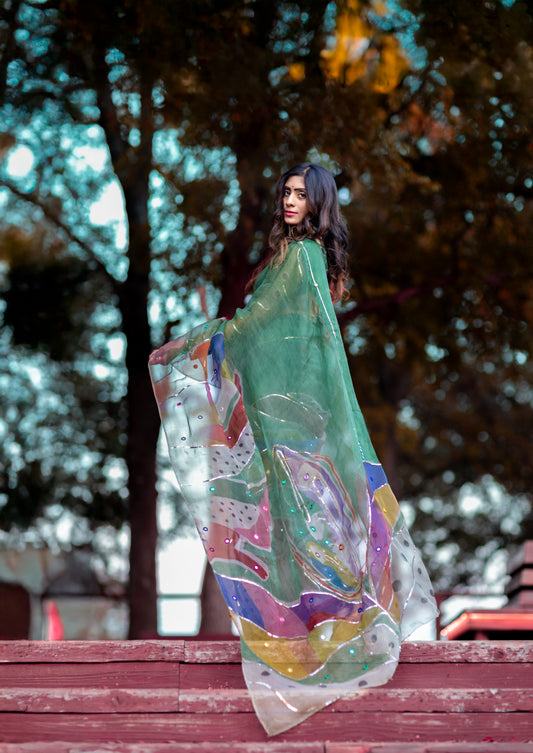
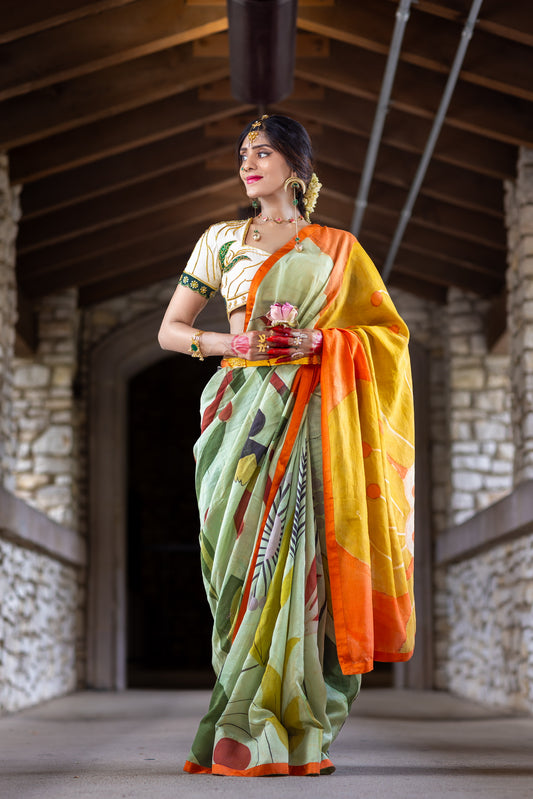
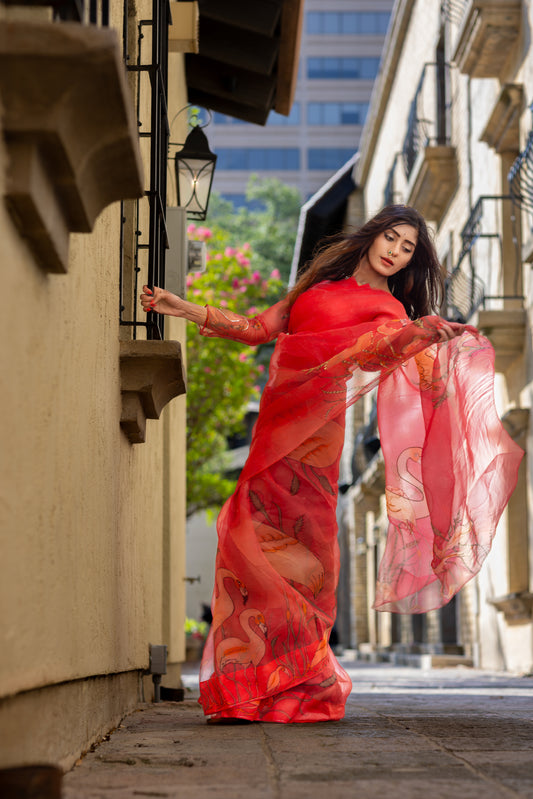
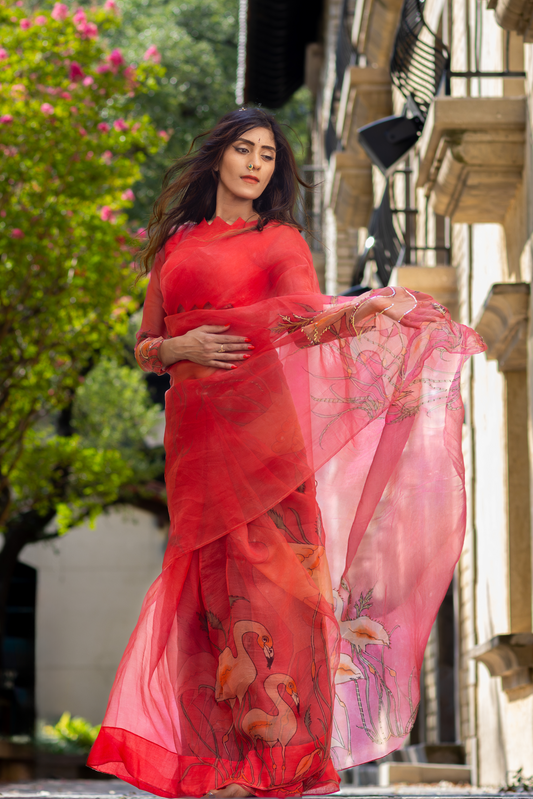
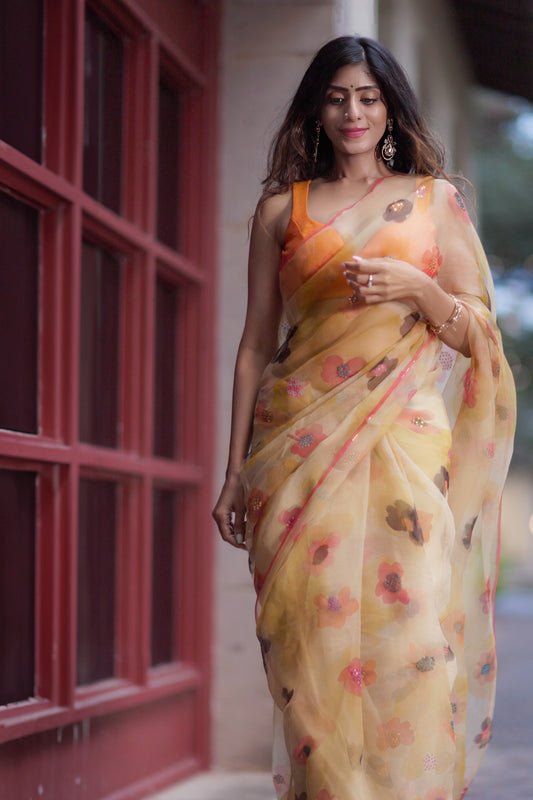
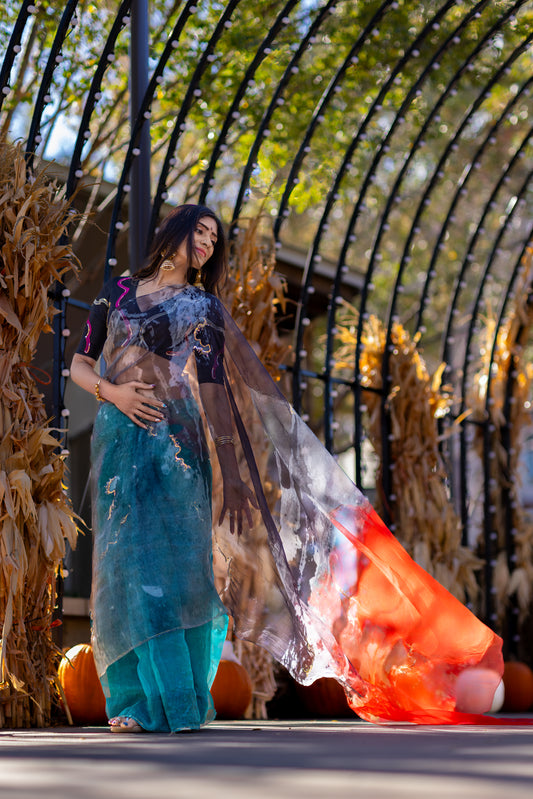
Collection: Hand Embroidery Sarees
Texture is evidence of the human hand.
Motifs become memories. Lines become connections. Dots become crossroads where one story meets another.
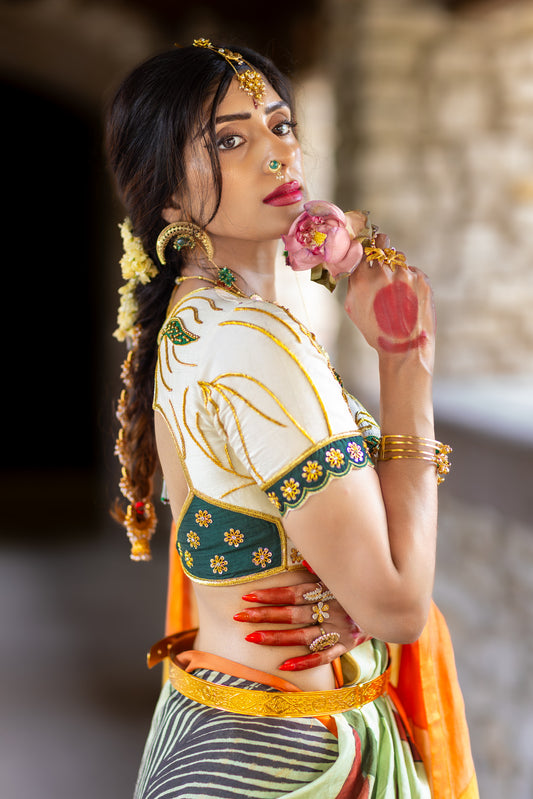
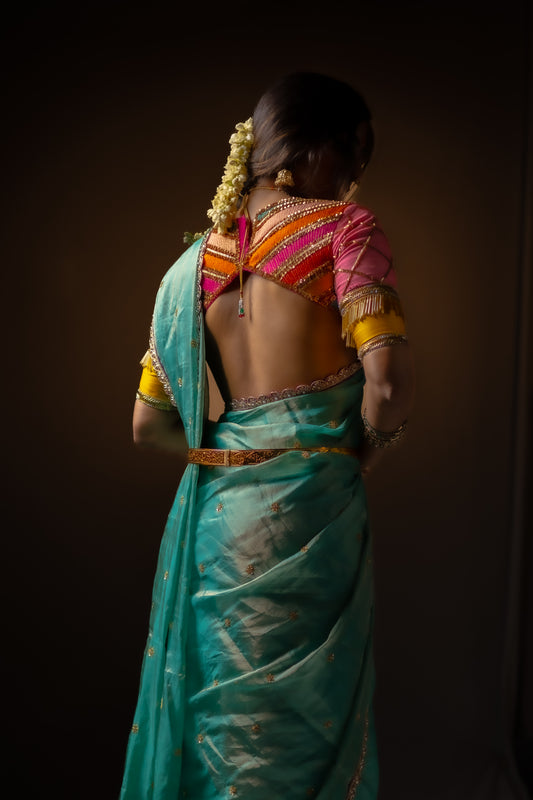
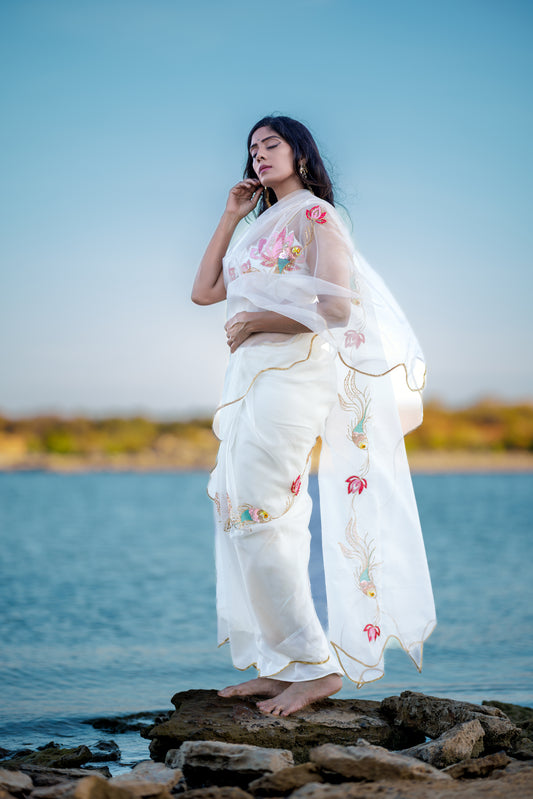
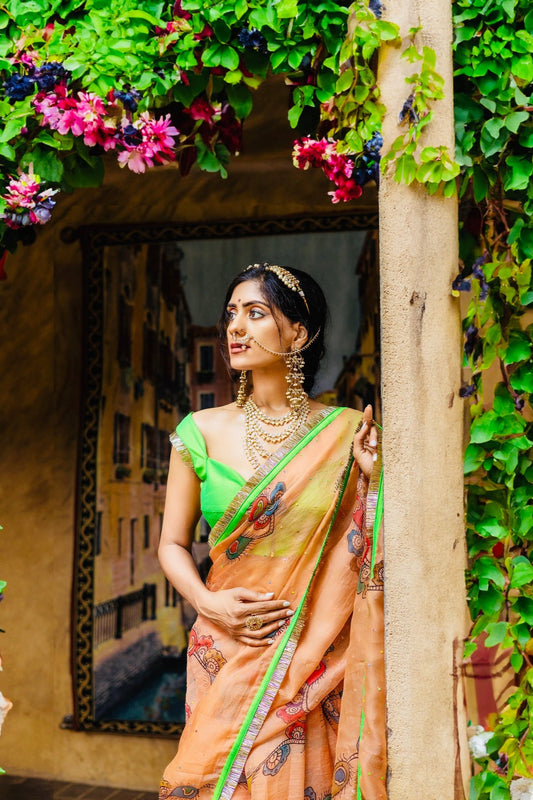
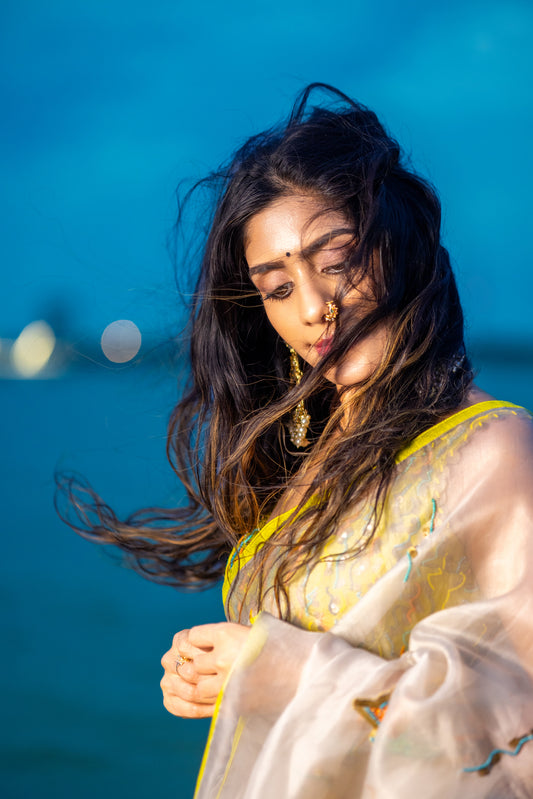
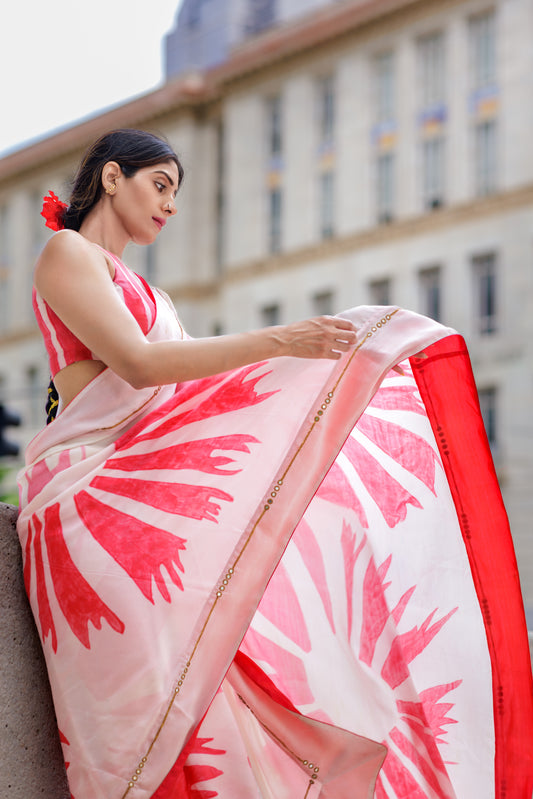
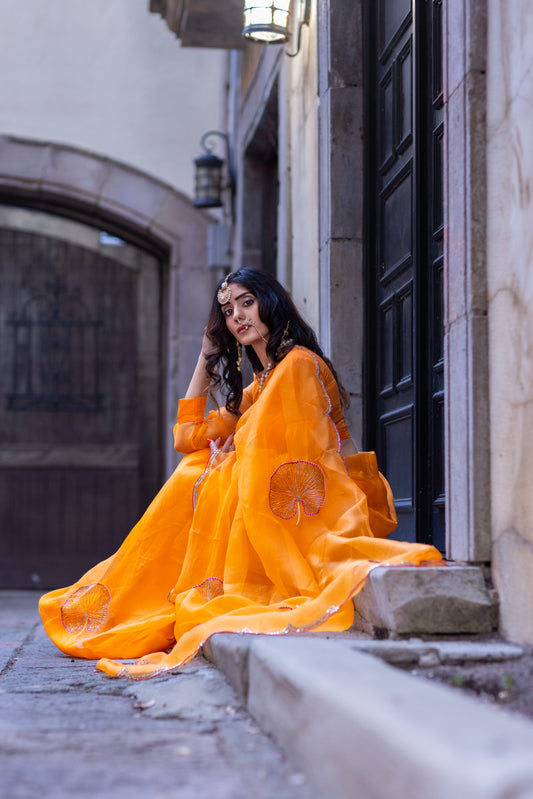
In our hand-embroidered sarees, thread does more than embellish cloth — it gives it a pulse. Each stitch carries intention, movement and the quiet unpredictability of a hand at work.
These are pieces meant to be felt slowly, worn often, and remembered differently each time.
How should I take care of my hand-embroidered sarees?
Dry Cleaning only.
Are hand-embroidered sarees appropriate for weddings?
Yes — perfect for bridal and festive activities.
Am I able to customize the design?
Yes, we accommodate as much as we can with the customizing of the design elements.
Why does Ojasi hand embroidery sarees stand out compared to other labels?
We try our best to bring in original, authentic, unique aesthetic designs to your wardrobe. We take pride in the fact that you cannot find our designs anywhere else.
Do you operate authentic zari and resham?
All our sarees are handcrafted using high quality fabrics and materials to give you a luxurious look for those special events or festivals.
Are these sarees appropriate for hotter climates in Texas or California?
We got you covered for all seasons. You can find sarees that are versatile and season-friendly on our webstore.
Yes — best for weddings, Diwali, Eid, and bridal gifts.
The Language of Hand Embroidery
Hand embroidery changes a textile slowly.
A line becomes thicker where the hand lingers. A motif shifts slightly as it travels across the cloth. Threads catch light differently depending on their direction, building texture that cannot be understood from a flat image alone.
At Ojasi, we are drawn to embroidery for that reason — it records the process of making. The hand is never entirely invisible.
Our embroidered sarees explore thread as line, surface and gesture. Some details are quiet and almost disappear into the fabric; others interrupt it deliberately. What matters is not how much embroidery is added, but what it brings to the composition.
Produced in limited quantities, these pieces are designed to retain that sense of individuality — something made slowly enough for variation to remain part of its character.
Texture is evidence of the human hand.
Choosing a selection results in a full page refresh.