Join our mailing list to enjoy 10% off your first order.
Collection: Digital Printed Sarees
Textile is a medium. The expression is limitless.
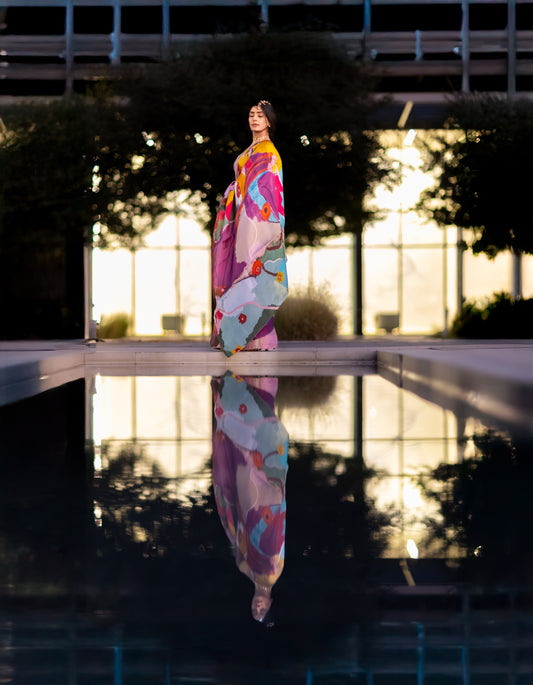
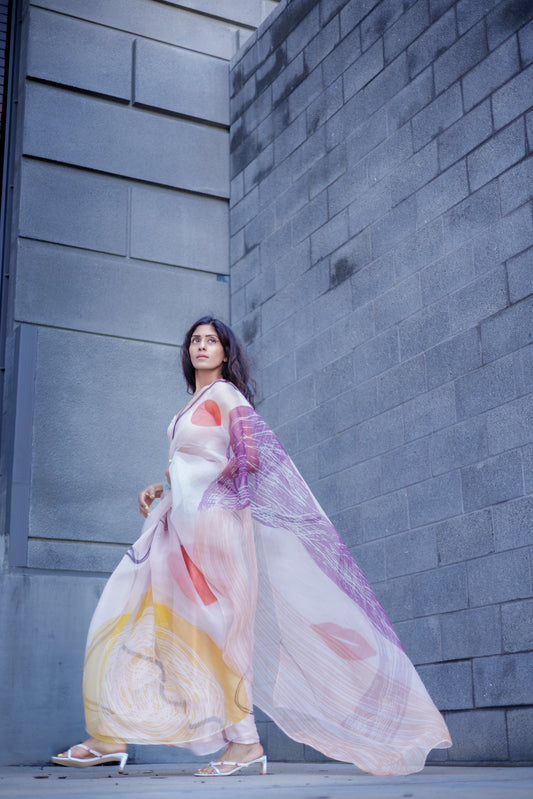
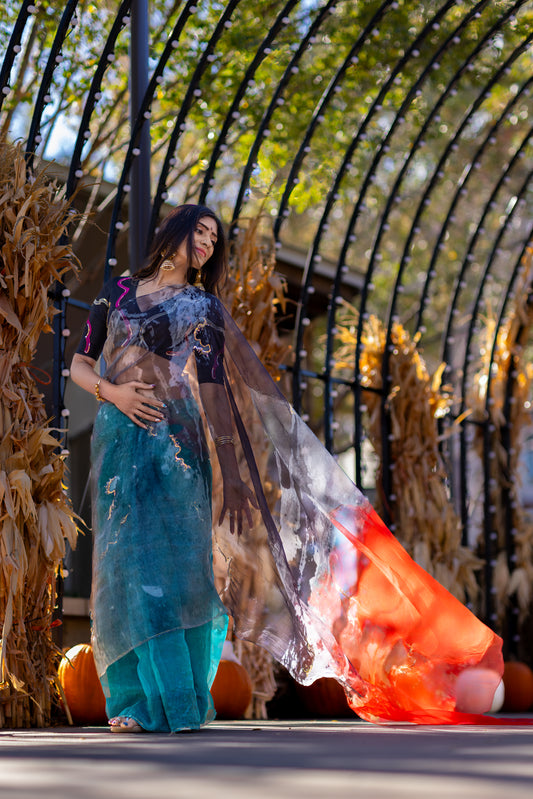
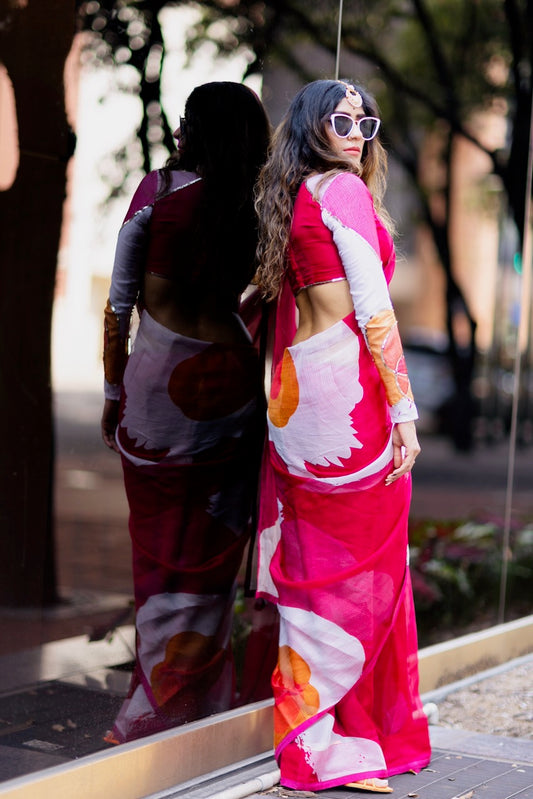
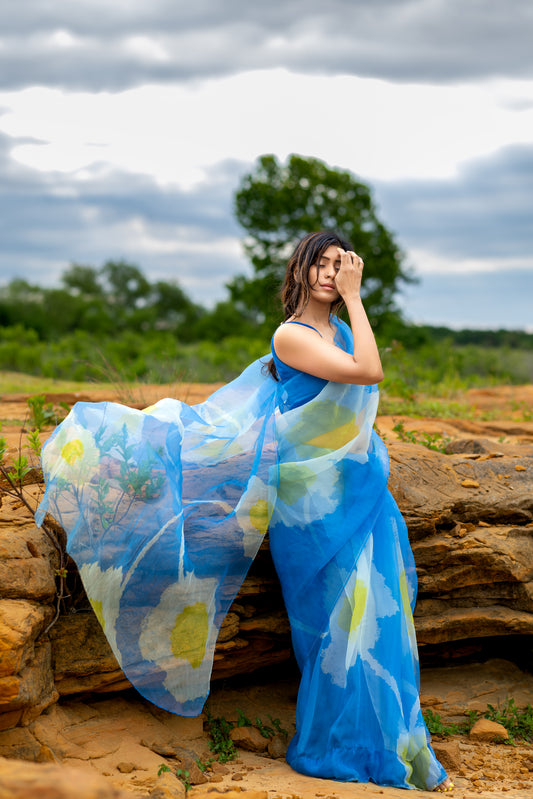
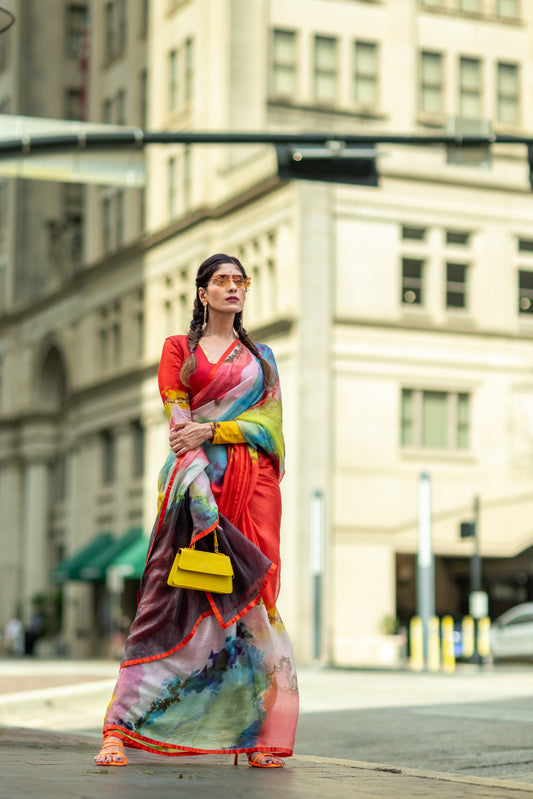
Colour spills, shapes interrupt, lines wander and familiar forms become slightly unfamiliar. Our printed sarees explore the space between textile and composition — where a motif can feel like a memory, a gesture, or simply a moment of colour that caught our attention.
Printed in small runs across fluid silks, organzas and contemporary fabrics, each piece is designed to change as it is draped — revealing a different part of the artwork with every fold.
Yes, Ojasi uses eco-friendly dyes in all our digitally printed sarees.
Can I customize a design?
We offer customization options. Please contact us for more details.
How do I care for my digitally printed saree?
We recommend gentle hand washing or dry cleaning to maintain the vibrancy of the prints.
Do you offer international shipping?
Yes, we ship to India, the USA, and the UK.
What fabrics are used?
Our digitally printed sarees are available in various fabrics, including silk, cotton, and georgette. Explore our printed chiffon saree range for a light, breezy option.
Will the digital print fade after washing?
No. We recommend dry cleaning to keep the colors vibrant and long lasting.
Can I wear digital printed sarees for marriages or festival events?
Yes! Our modern designs over the sarees are versatile across the board and we have something for everyone for all seasons.
How are your digital printed sarees different from printed cotton sarees?
Digital prints offer advanced resolution, more complex designs, and a contemporary edge, while printed cotton is generally more introductory in design.
The Art of the Printed Saree
Digital printing gives us a different kind of freedom — the freedom to treat the saree as a canvas.
At Ojasi, our printed sarees begin with colour, shape and composition. Some are abstract and gestural; others borrow from florals, geometry or fragments of the everyday. The artwork is then translated onto silk, organza and other fluid fabrics, allowing the image to shift with the body rather than remain fixed on a flat surface.
That movement is part of the design. A form that appears whole when the saree is open may disappear into a pleat, while another detail reveals itself unexpectedly at the shoulder or pallu.
We produce our printed sarees in limited quantities, allowing each collection to remain exploratory rather than repetitive.
For us, digital print is not a shortcut to decoration. It is another way for an idea to become textile — and for textile to become something worn.
Choosing a selection results in a full page refresh.